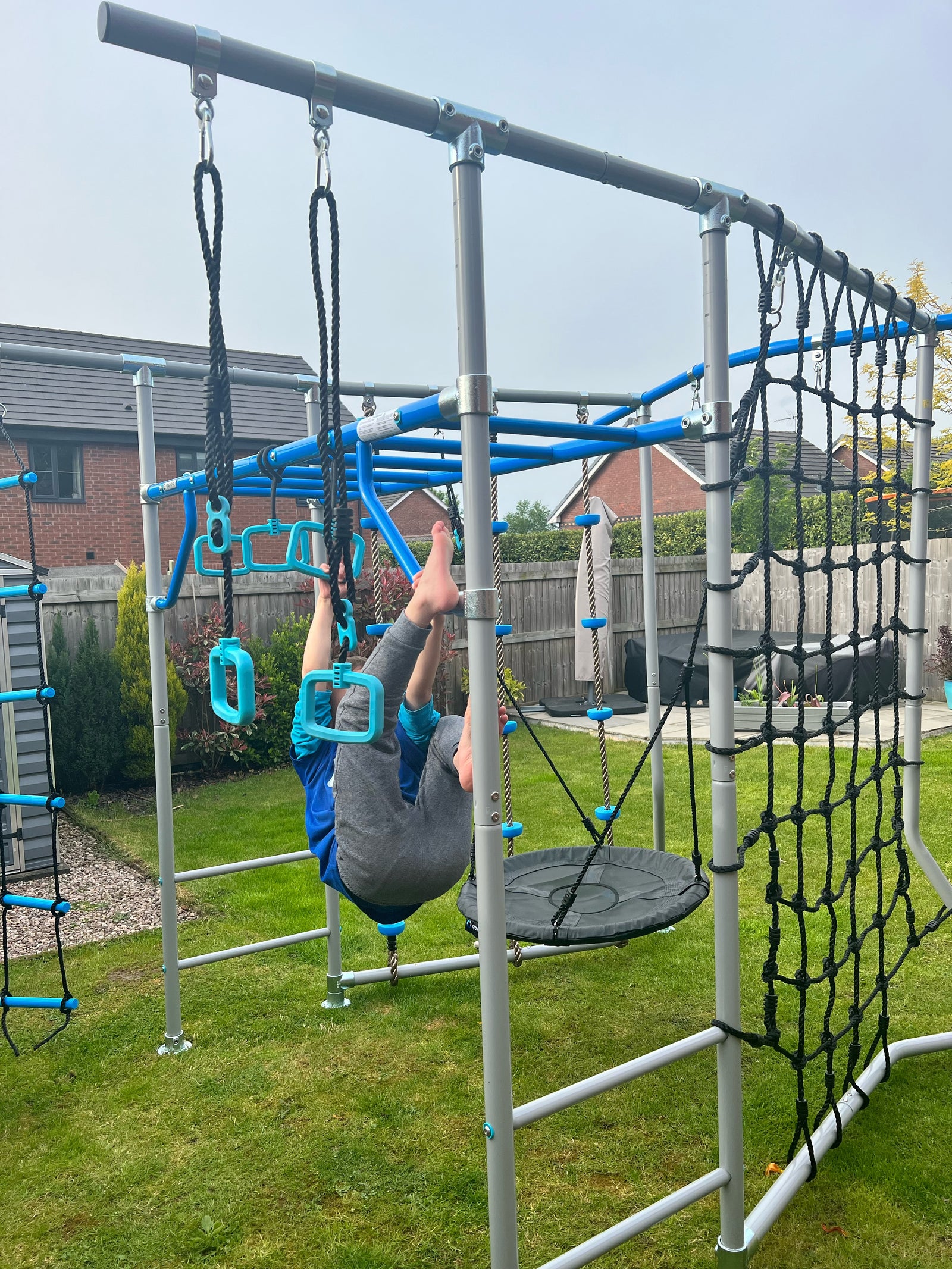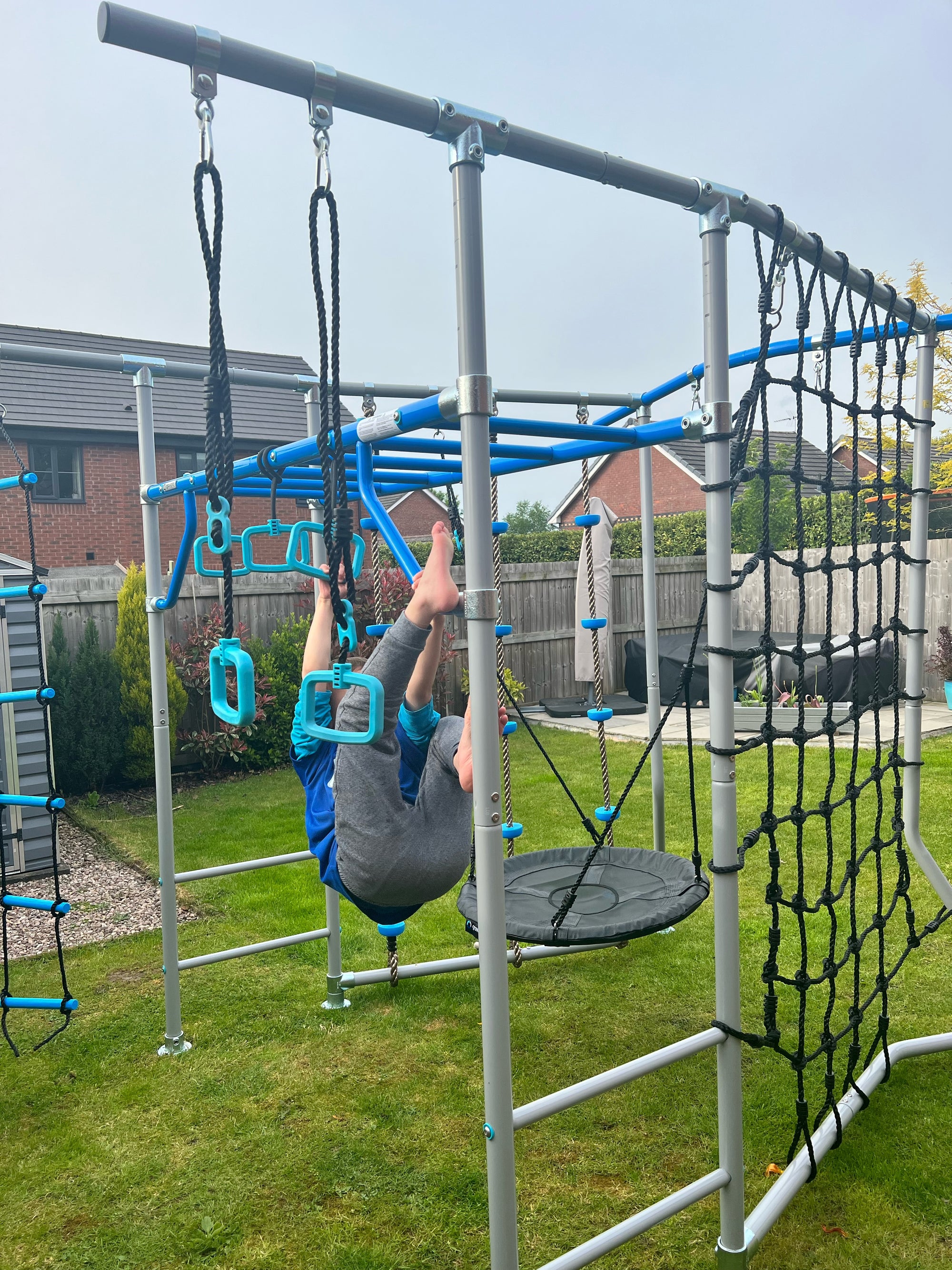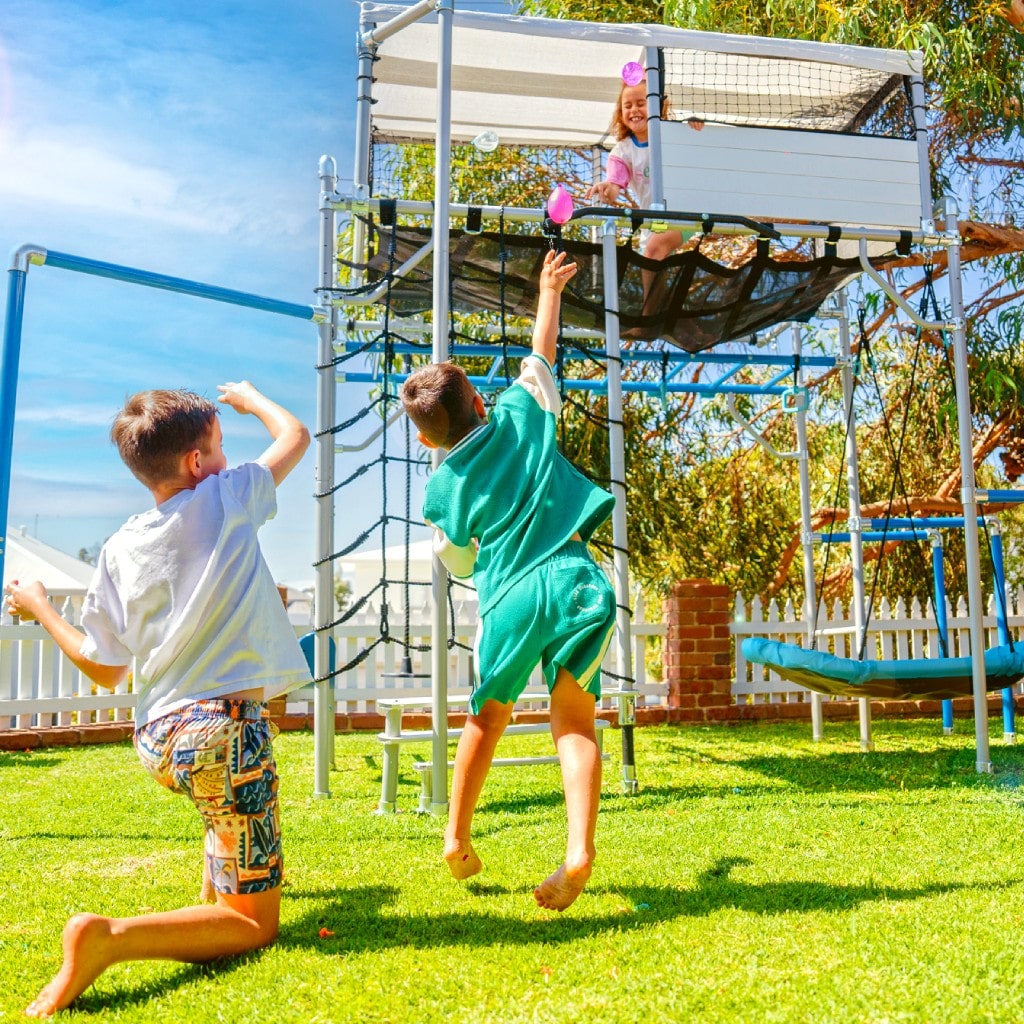
Children can get years of fun from garden playhouses, but how they use them evolves as they grow and never stays the same. A toddler might be happy just climbing around and crawling through the play areas. A few years later, the same play area could become part of a pretend game, a challenge course, or a place to hang out with friends.
For parents, changes in how children play and interact present a challenge: how do you choose the right playhouse, one they'll keep using as they grow up? The activities children enjoy as they age, the way they interact with the playhouse layout, and how they socialise with siblings and friends are all factors that need to be considered when buying a future-proof playhouse for your children.
In this article, let's consider these factors to help you choose the best garden playhouse:
- How do children use a garden playhouse at different ages?
- What features are worth considering for each age bracket?
- What playhouse setup is the best for your growing children?
Toddlers (Ages 1–3): Exploring Everything Within Reach
For toddlers, everything can be entertainment. Safe and simple activities like jumping and climbing can keep them occupied for hours. Moving around the playhouse, whether running or crawling, is enough for them to have fun and build their motor skills.
As they develop their cognitive abilities, you may see them start simple pretend games, especially with their toys. At this age, their imagination starts to develop, and even the simplest play area setups can be fun and engaging.
What's more, it gets better with a friend or two. They can start playing together, without any concept of what they're playing, just pure fun. There's no need to force them into roles. You can just watch as they have fun and explore the playhouse.
So what do you need to look for? Safety is always the top priority, no matter the age. At this stage, easy ground-level setups with smooth edges are the best. Avoid anything with detachable parts that can pose a choking hazard. For garden playhouses, start with low-risk activities and add-on accessories, such as swings and slides.
Preschool Children (Ages 3–5): Making Up Their Own Games
By the time children reach preschool, playhouses and accessories like monkey bars become more than just a place to climb. As their imagination grows and they start to engage in more scenario-based play, the playhouse can become all sorts of settings for playtime, from rescue stations and clubhouses to castles and other make-believe worlds.
At this age, they may bring along a few props and toys to bring their imaginative play to life. They don't need much to get started. Just give them space, and they'll come up with games and play ideas that you wouldn't have thought of yourself!
Things get even more interesting when a few friends or siblings join in. They get to decide who gets to play what and take turns. They also develop their social skills, especially when they have to decide what to do when not everyone is on the same page. Playtime won't always be perfect. But that's the fun part: sharing ideas and working together.
So what do you need to look for in a playhouse? Because your children are growing and starting to make friends, you need enough space for shared play. Look for features that provide a variety of ways to play, such as ladders, ropes, and climbing areas. You do want to make sure the height and specifications are suited to their age and abilities. And as they use the play area more, choose easy-to-maintain, easy-to-clean setups.
Early Primary School (Ages 6–8): Clubs, Challenges, and Garden Adventures
At this age, children can imagine the playhouse as their own headquarters. They can come up with a club name and set clearer rules. Rather than a jumble of imaginative pretend play, children start to take control over how they and their friends play the game.
For children who love sports and being active outdoors, the playhouse becomes a space to challenge their abilities. They can imitate what they see on their screens while creating their own versions of challenges and obstacle courses. Some children may also use the space to just casually hang out and chat with new friends.
During this time, the appearance of the playhouse matters more than ever. A simple design can make imaginative play more flexible. Some may prefer a space with a bit more variety. It really depends on your children's preferences and their abilities as they grow.
So what do you need to look for? Look for a comfortable space that can grow with your children. Always check compatibility and each component's limits. Give them enough room to move around without making the structure feel cramped as they get more active. Provide children with various ways to play, choosing features that you think will help keep playtime interesting for longer.
Pre-Teens (Ages 9–12): Somewhere to Spend Time With Friends
As they build more connections with others, the playhouse can become a place where they spend time with friends, not just a structure for climbing and playing. They still enjoy imaginative and challenging play, but now even more so as they're socialising with friends.
At this age, comfort becomes a bigger consideration. You need enough space for your children to play and move around. Appearance matters too. A simple design suits most children as they start to turn it into their own play world. For children who also use the space to hang out or do quiet activities, a swing or two can be a great addition.
So what do you need to look for? Check the dimensions, age guidance, and weight limits to make sure the structure is suitable for your growing children. Because they start to make more friends at this age, consider play spaces that can safely accommodate a group of energetic children, and opt for a flexible setup that allows for varied play.
Choosing a Garden Playhouse for More Than One Stage
You can't stop your children from growing or predict what they'll love in a couple of years. But you can choose a playhouse that provides flexibility and space to grow into.
Start with a setup that fits your children now, not equipment made for older children just to get more years out of it. Always consider safety first, ensuring you get playhouses and monkey bars that fit your children's abilities. With that said, it's important to see if they can be expanded or customised so your children can enjoy them as they grow.
If you've got children at different ages, consider each of their preferences. A flexible and customisable setup can provide each of them with something to enjoy, whether they want to climb, stay active, play make-believe, or simply spend time together.
Choosing the right materials matters too. A galvanised steel frame with a powder-coated finish can handle years of outdoor use. It's a worthwhile investment compared to timber that needs regular staining or plastic that fades and can become brittle. But no matter how strong the material is, it's essential to regularly check the anchors, fasteners, and other components to ensure safety.
Lastly, when choosing a customisable playhouse, ensure it offers you customisation options, specifically accessories like slides and ladders that you can add on later. This makes a big difference in choosing a playhouse that your children will use as they grow from children into teenagers. And that helps you get the most out of your investment long-term.
Summary
Playhouses don't have to mean the same thing to your children forever. When they're younger, they might be happy simply exploring the structure, climbing around, and making up simple games. As they grow, that same playhouse can become a place for bigger challenges, imaginative play, and hanging out with friends.
When choosing a playhouse, always consider your children's age and abilities. Safety is always the first priority. Space and durability come after. And if you want to get the most out of it long-term, consider getting a customisable and expandable setup so that it keeps up with your children as they grow.
Growplay's Playhouse combines a galvanised steel frame with powder-coated aluminium panels and is designed to attach to compatible Large or XL monkey bar frames. Check the recommended ages, access requirements, and user limits to make sure it suits your children. If you're starting from scratch, the Large and XL bundles include the frame and playhouse together.