A garden playhouse can be a big purchase, so you want to know your children will get plenty of use from it. Will there be room when friends come over? Will it still suit them in a few years? And how much work will it take to keep it in good condition?
Choosing one gets easier when you know what to look for. This guide covers materials, garden space, safety, installation, and how to pick a playhouse that your family can enjoy as the children grow.
Choose a Material You Can Look After
The first thing you'll probably notice is how a playhouse looks. But once it's in the garden, the material makes a difference to how it handles the weather and how much maintenance you'll need to do.
Timber has a traditional look and can be painted to suit your garden. Depending on the wood and finish, it may need regular staining or sealing. You'll also need to check for splinters, loose joints, and moisture damage, especially after wet weather.
Plastic is often an affordable starting point for younger children. It's easy to wipe clean and doesn't need painting, although smaller designs can be outgrown quickly. Some plastics can also fade or become brittle after prolonged exposure to sunlight.
Metal is worth considering if you want a sturdy structure with less routine upkeep. Galvanising helps protect steel against rust, while powder coating adds a protective finish. The metal frame won't rot or splinter, but you should still check its coating, fixings, and other components as the manufacturer recommends.
Think about where the playhouse will go, too. A sheltered spot with good drainage is different from an exposed area where water collects after rain. Check the manufacturer's guidance for the conditions in your garden.
Measure More Than the Footprint
Before ordering, mark out the space the playhouse will take up. Then add the clearance required around it. Children need room to get in and out, move between activities, and play without nearby fences or other obstacles getting in the way.
If the setup includes swings, allow for their full movement and the clearance specified in the instructions. For a playhouse connected to a climbing frame, measure the whole configuration rather than the playhouse alone.
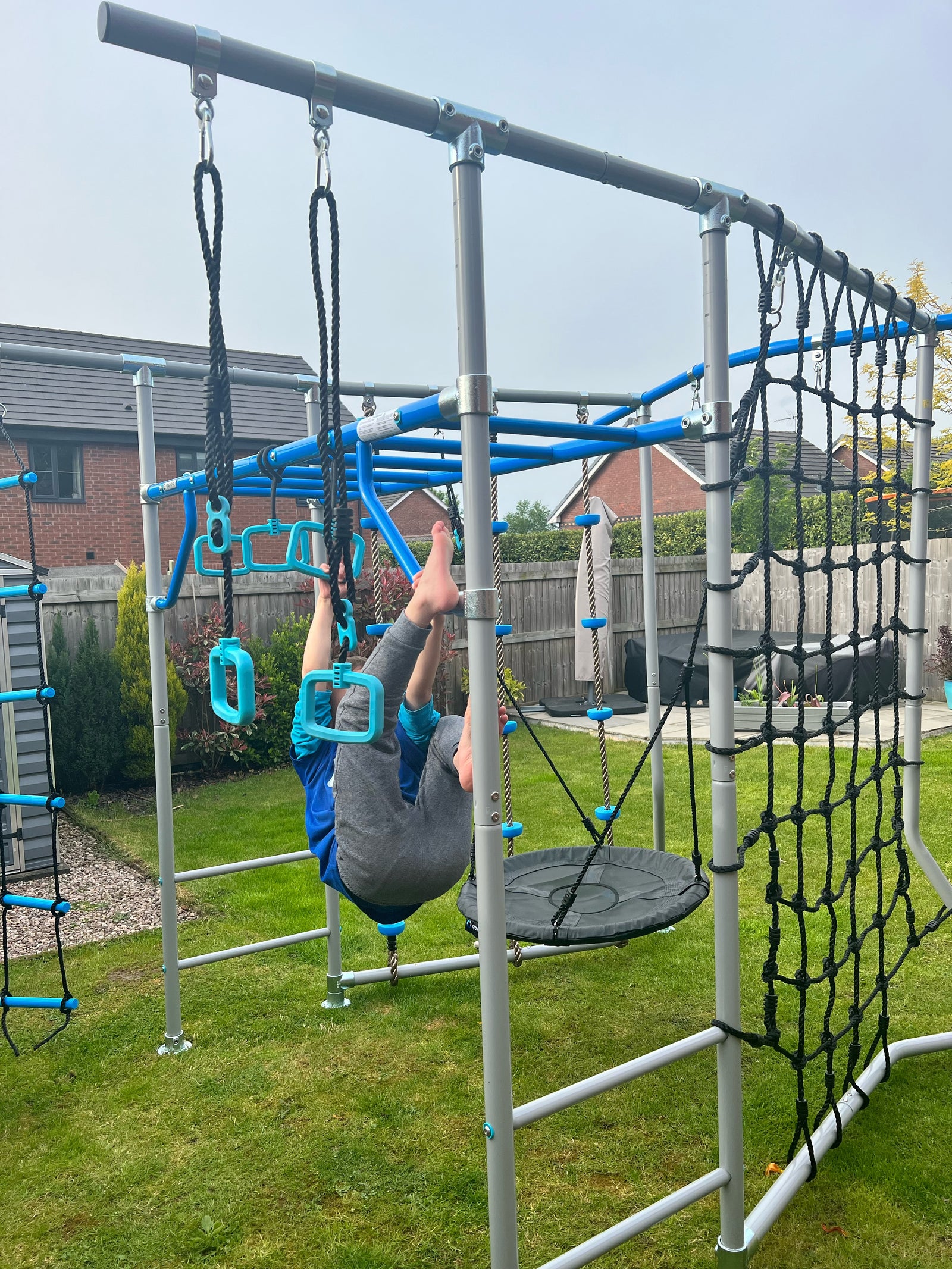
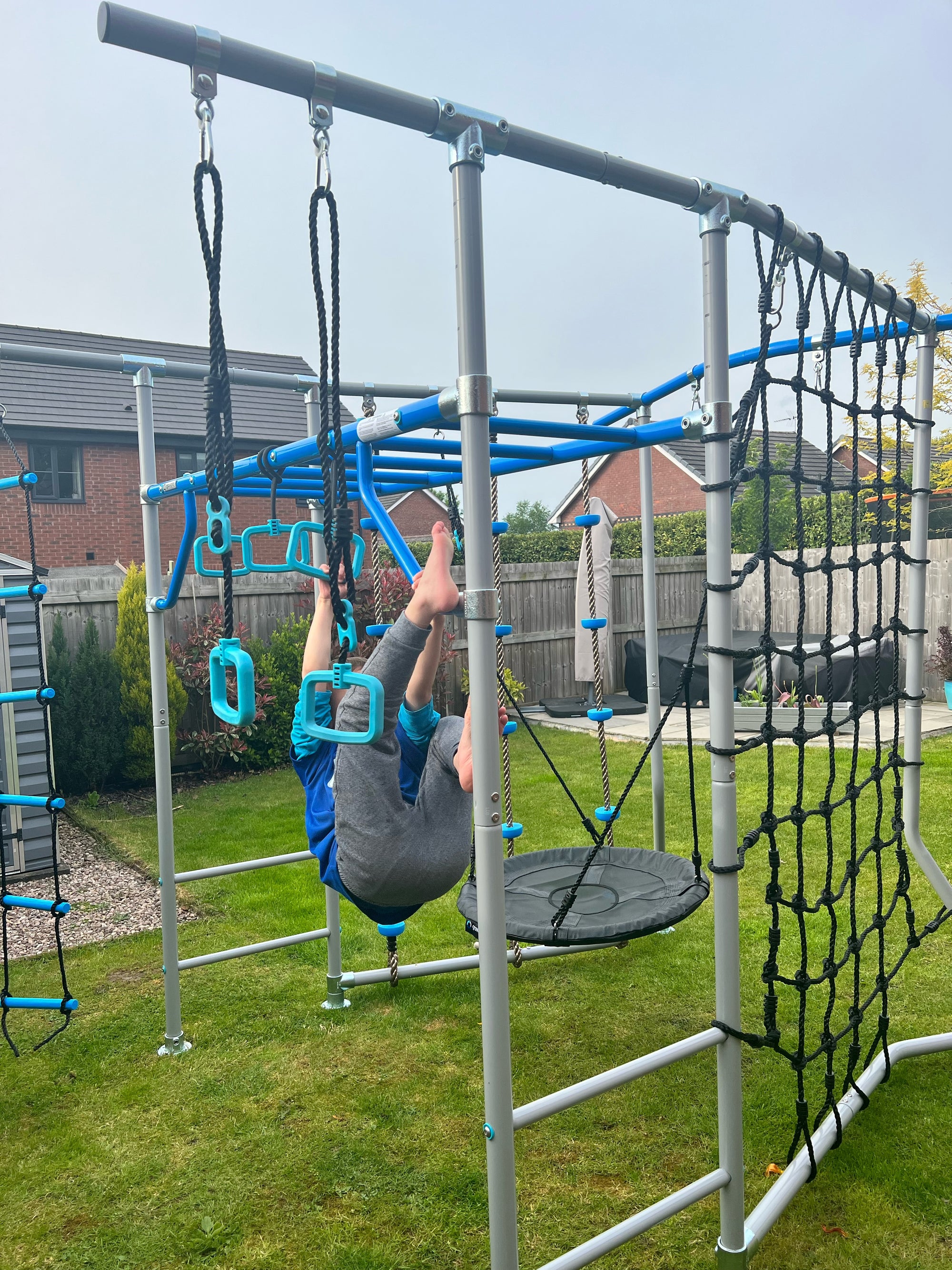
It's worth doing this before you settle on a model. The Growplay kids playhouse range combines a playhouse with active garden play, so look at the dimensions and space requirements for the complete setup you're considering.
Think About Who Will Use It
A small playhouse might be just right for your youngest child today. But will an older sibling fit comfortably? What happens when a friend comes round? Look at the usable space inside, the entrance height, and the number of children allowed to use it at once.
Size is only part of the decision. Check the recommended ages and how children get in and out. An elevated playhouse with a climbing entrance offers a different kind of play from one at ground level, and it needs to suit your child's abilities.
If you're buying for children of different ages, think about what each of them enjoys. One might want somewhere to sit with their toys, while another is more interested in climbing. A setup with a few ways to play can help both get use from it.
Plan the Installation Before It Arrives
Once you've chosen a spot, check what needs preparing. Follow the manufacturer's requirements for the ground surface, clearance, and anchoring. A space that looks suitable may still need work before assembly can begin.
Read the instructions ahead of time so you know which tools you'll need and how many adults should help. Give yourself enough time to assemble, secure, and check everything before the children use it.
After that, keep up with the recommended checks for loose fixings, wear, and secure anchors. Follow the age and supervision guidance for the equipment, even as your children become more confident using it.
Leave Room for Different Ways to Play
A playhouse might start as a pretend shop, then become a clubhouse or a base for games across the garden. Connecting it with climbing or swinging gives children more things to do around the same structure.
They can climb up, spend time inside, and head back out to another activity. That variety can be useful when siblings want to play together but don't always want to do the same thing.
If you'd like to add equipment later, check what fits the frame before buying. Accessories are often designed for specific models and sizes. You don't need to buy everything at once, but knowing your options makes it easier to plan the space.
Helpful Next Steps
Summary
The right playhouse should fit your garden and suit the way your children like to play. Check the materials, recommended ages, usable space, and installation requirements before deciding. Think about the upkeep you're happy to take on and whether you'd like to add more activities later.
A metal playhouse is a good option for families who want a durable structure without the regular staining that timber can need. With enough room and a suitable setup, it can give your children somewhere to make up games, spend time with friends, and enjoy the garden for years to come.